Unholy union
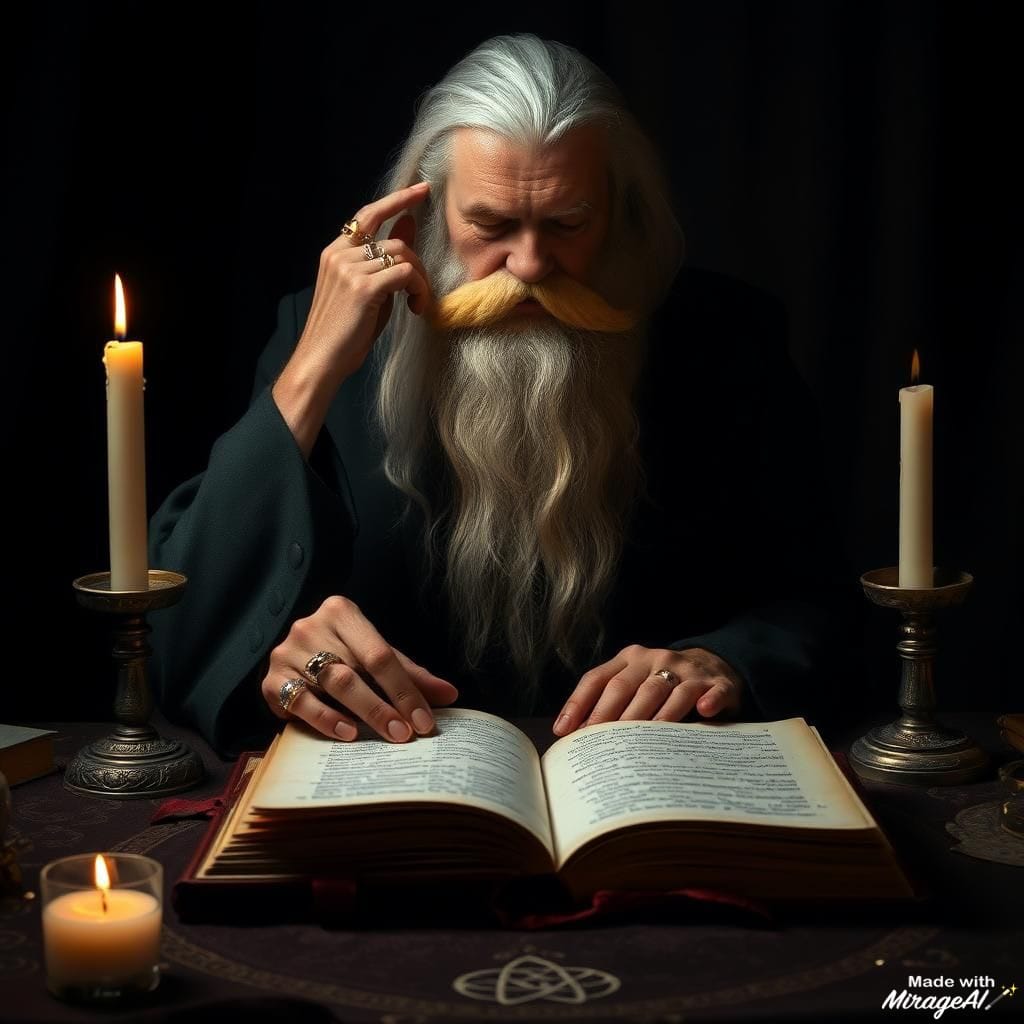
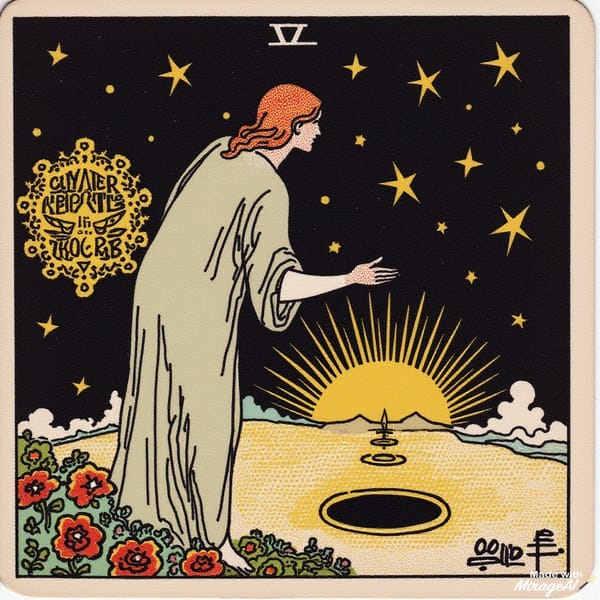
By candlelight alone, he drew a circle on the altar and wrote the names.
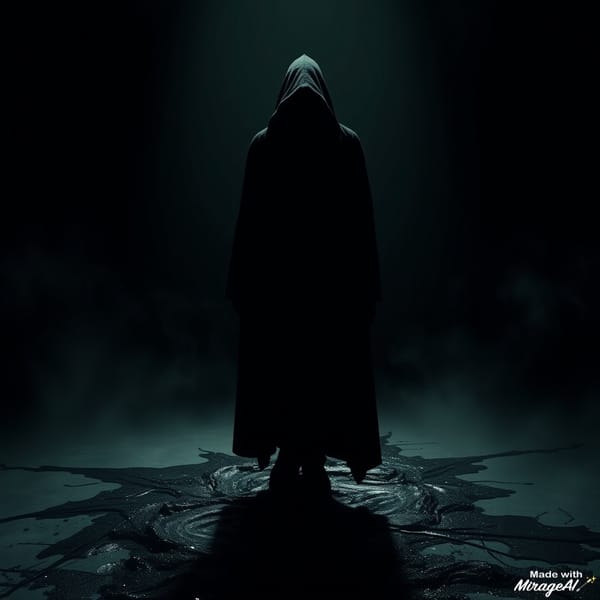
He had a long white beard, yellowed around the mustache from the tobacco he used for divination.
With hands heavy with rings, he brushed the hair from his face so he could see clearly and opened his book—black leather, blue ink, each word written in careful, masterful cursive.
Inside the circle, atop the names, he placed objects to represent them both: the man and the woman.
The circle itself was made of red string, left overnight to bathe in moonlight, then dipped in morning dew collected the previous spring.
He began to read, unhurried, allowing each word to fill the space—from one corner of the room, down the hallway, into the next.
As his voice echoed through the house, the string began to move. It tightened, shrinking inward, wrapping itself around the objects above the names.
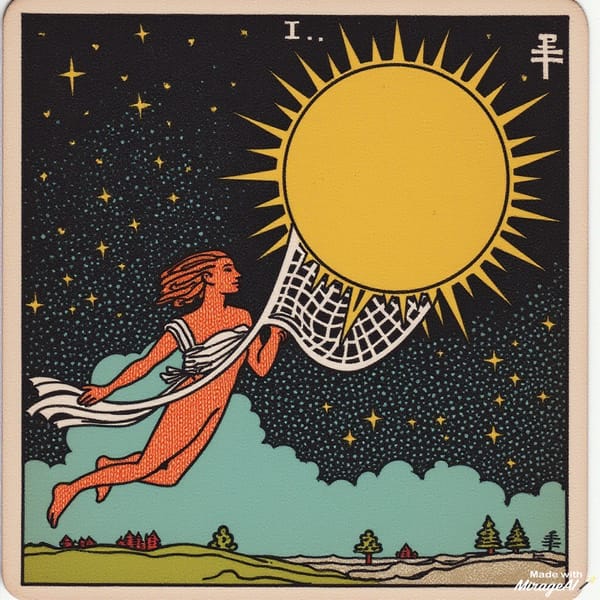
As the candle’s flame diminished, it grew brighter at one end of the string, which was now fully bound around the objects.
His words returned rhythmically, one echo overlapping the next, never fully fading before another took its place.
The fire lit the objects without burning them. The string remained intact. As he spoke the final word—woven into the last echoes—the flame turned blue.
The silence that followed slowly dissolved, returning from the farthest corner of the house, carrying the fire back into the candle.
Elsewhere, the man lay in his bed, staring at the ceiling, wondering why his cheek hurt when it had been so long since his last smoke.
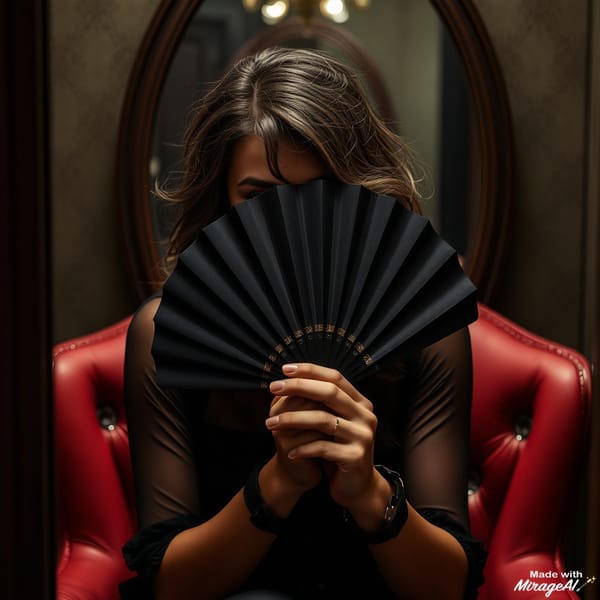
She was crying. Another night without him. Nothing seemed to bring him back. At the center of her chest there was no pain—only cold, a cold that burned.
The man began writing letters that would never be sent, addressed to a woman whose name he dared not write.
The words reached her like whispers on a cold night. They did not carry her name, but she knew they were meant for her.
As he wrote, the pain returned—a pressure in his chest that came and went. Each word brought a sting, sharp enough to notice, but nothing more.
As she walked, the stings matched each tear that formed and fell. In her heart, the warmth that had once lived there was gone, replaced by a hollow ache.
Inside the heartbreak, a layer of cold—the words whispered by the night.
Another sting.
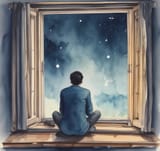
The man stood and looked out the window at the city below, busy and tireless.
A thought crossed his mind: she was out there somewhere.
His chest went quiet. The pain vanished, replaced by warmth—like bubbles rising.
Then it was gone.
He sat back down to write, and the pain returned.
He did not know the name.
She did.
Back in the house, the old man ran a hand through his beard. His rings clinked softly as he gripped the arm of the chair and sat down.