Stargazing.
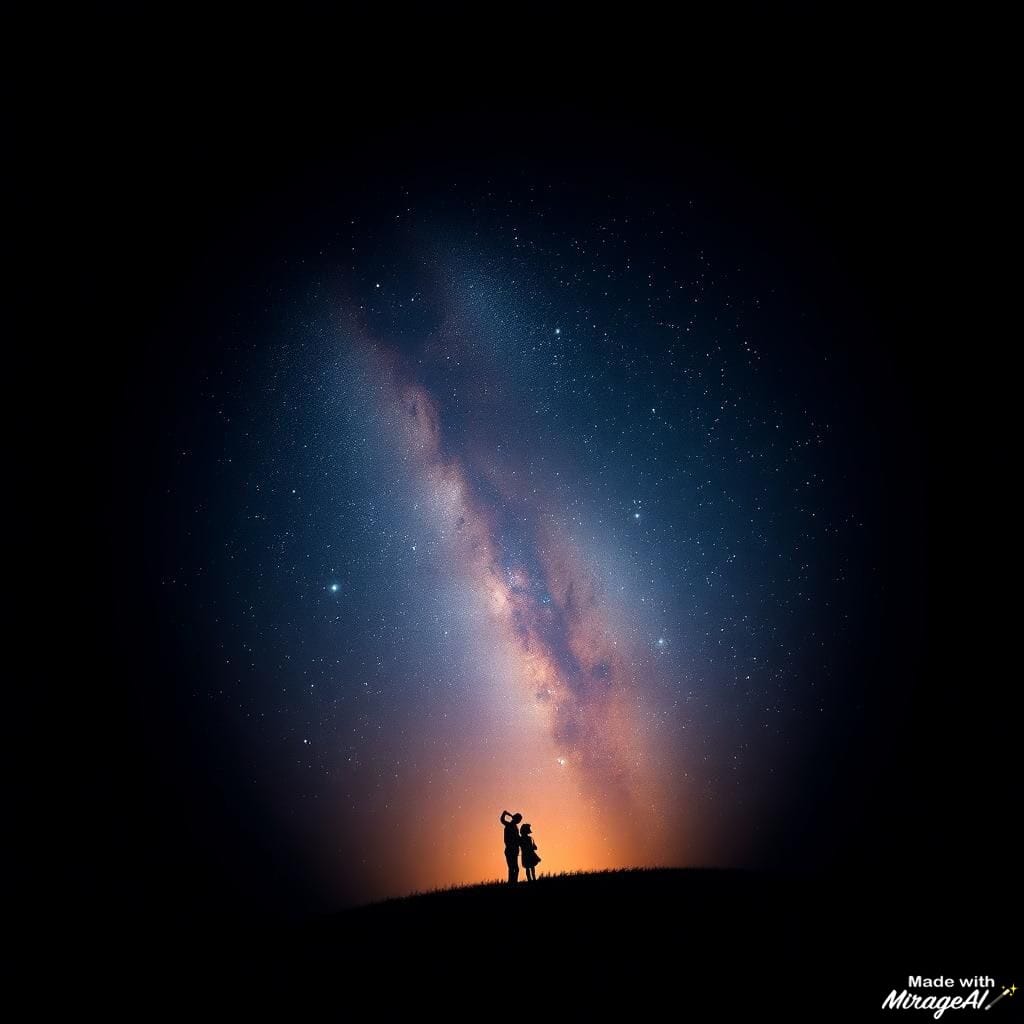
He was setting everything up, laying out the chairs and blankets. It was something they had done for years—to watch the meteor shower.
She was a mechanical engineer and had managed to create a machine that translated a live image of the night sky into a kind of tactile map. A very wide-angle camera captured as much of the sky as it could and translated the data into a table made of individual metal rods that moved up and down depending on the position of the stars.
Her husband had lost his vision when he was young, but he still remembered what the stars looked like. So she drew the sketches, did the math, and began building.
The only problem was that they would have to be incredibly lucky for a shooting star to pass through the frame of even a wide-angle camera. So she designed a second version: a dome, with multiple cameras feeding into the machine.
He became skilled at mapping the sky, moving his hand over the dome and feeling the raised points of stars and planets.
It took years of work—years of watching the sky and refining the mechanism until it could do what she needed.
That night, it worked.
She held a hot cup of coffee while he told her stories about the constellations, his hand moving over the dome as he pointed toward the sky. It was three in the morning, his hand resting around Orion, when he felt a faint, unexpected tingle run from the base of his wrist to his index finger.
By reflex, he almost lifted his hand. But when he understood what he had just felt, a tear fell from his eye.