Psychosis III
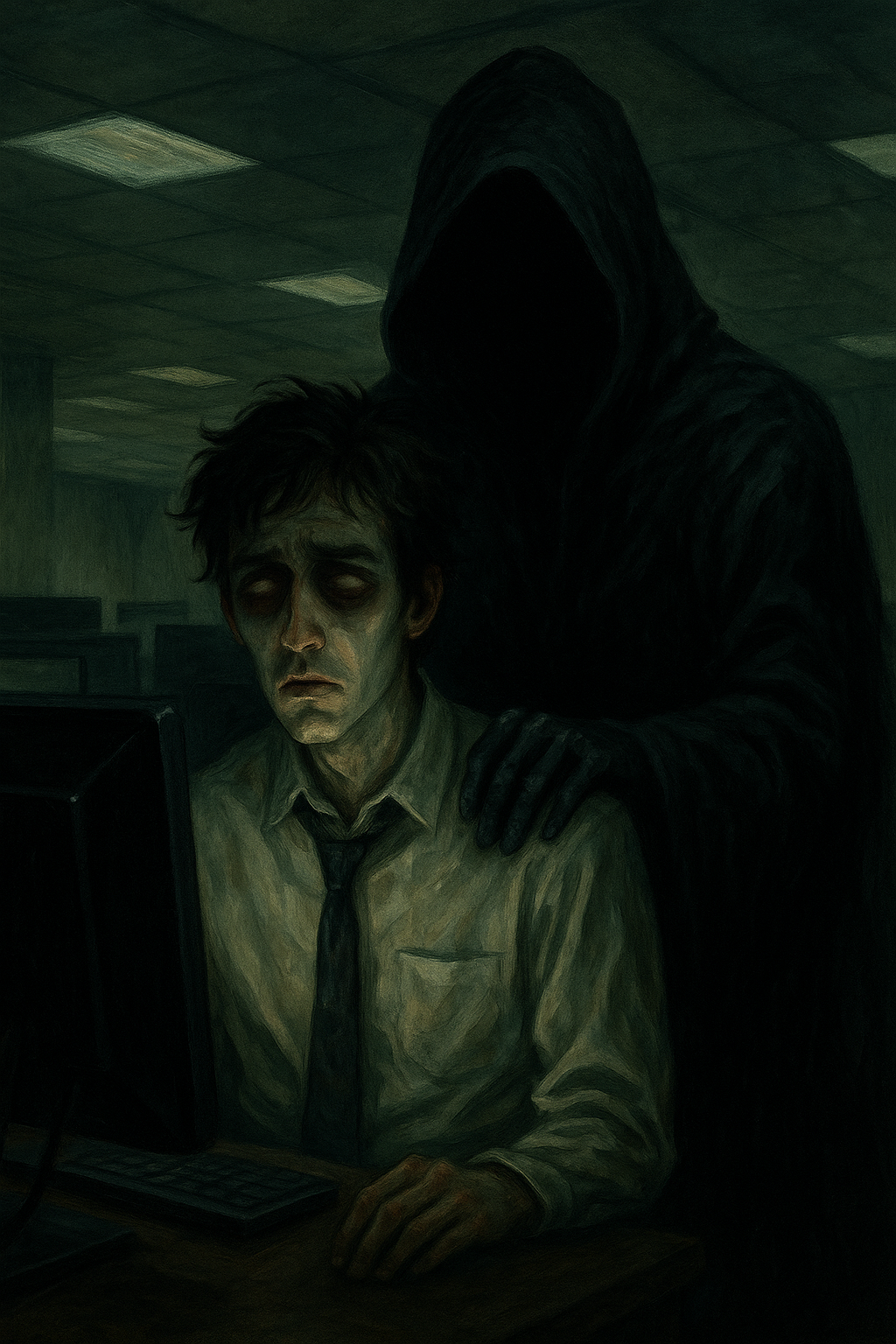
Another day in hell, he thought. It had been a year—a busy year spent doing nothing except getting fired from jobs and watching the stereotypical decline of his mental health.
From cyanide to nuclear-irradiated earrings. From human trafficking to a global drug operation. From climate control technology capable of governing the entire planet to fixing global warming in under a month.
WHO knew—his own running joke—that every intelligence agency in the world was watching him through his computer.
You’d think their job was to keep humanity safe. But things change when they decide you’re not human. From water to the internet, even so-called human rights—gone.
Water was the worst. A beautiful piece of science, something he called H-Bomb, or 25, like Christmas. As he understood it, it altered the chemistry of the body, weaponizing hydrogen so that drinking water made you thirstier, poisoning and dehydrating you at the same time. The antidote used to be Gatorade—until they supposedly dosed that too, just enough to make you buy more.
Even his own family poisoned him. Why? A book, mostly. They hacked him, stole his stories, sold them to others who claimed to be the writers. When his book finally came out, he was labeled the fraud.
They forgot about the website, though—the one with timestamps. The book had over a hundred stories. The site didn’t. But it represented more than two years of writing every night, even while autocorrect fought him and the internet refused to let him post.
They still didn’t leave him alone. So he posted everything—burning everyone in plain sight of “the law,” while no one did a thing.
He wrote angrily on his website, as he had for a long time. Notes app first. Best pieces posted later.
Then he felt it—the pressure. The pull. Whatever it was that altered thoughts and erased memories to stop him from writing. Their last resort.
It’s a throat, a voice said in his head, as he felt a cut at his neck.
You’ll be garbage if you don’t stop, another voice said.
“Garbage,” as they called it, meant being placed inside someone else who was being tortured. Every pain they felt, you felt too—from your bed.
He tried to rationalize it. Maybe the pain was just his own health failing.
The worst part came when he decided he’d had enough and pills seemed like the solution. Prescribed antidepressants.
He began calling the voices behind the voices echoes. And the moment he was prescribed medication, one of the echoes said, Take two.
That sent him spiraling. What if the pills weren’t meant to help him at all?
Writing on his website became an act of rebellion. Every secret posted came with a price: a cut to the throat, poison in small doses—not lethal, just enough to send the message.
Food wasn’t safe. He found himself smelling everything, searching for poison. His mother saw him once and asked why.
With no other option, he told the truth.
Sometime later—it could’ve been a day or a week; time no longer behaved—his father got sick. Electrolytes, he thought. That’s what he was taking.
Then the echoes said the antidote was poisoned too. His father should drink water instead.
After the night when “garbage” was about to become worse than torture, panic took over. He decided to end his life.
Alcohol. Sleeping pills. All at once. When that felt too slow, he grabbed a knife.
He cut his arms, searched for arteries. The knife was dull. No scars. Luck or misfortune—he couldn’t tell.
He put his shirt back on and passed out from the cocktail.
He woke up with an oh no. In his dream, he’d been in a car accident.
It was a weekday. Valentine’s Day. He went to work—too much to explain otherwise.
His computer and phone were dead. He had no choice but to go in.
On the drive, he saw the first shadow. A man sitting in the back seat, visible only in the rearview mirror.
At work, two more shadows danced in the black reflection of the screen.
“He saw…” one echo said, as a woman nearby argued with someone, frantic.
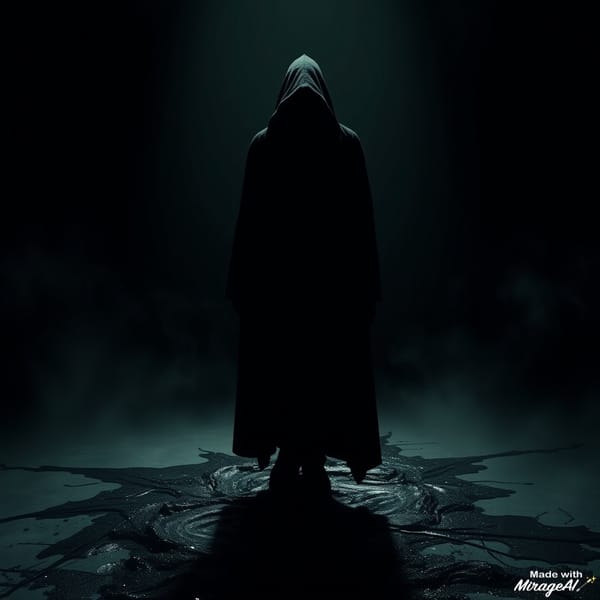
The shadows merged into a single hooded figure. It approached. Placed a hand on his shoulder.
By lunchtime, the office felt wrong. Dark. He knew it was time to leave.
That night, the figure returned.
His room filled with faceless shapes only he could see. One figure remained solid—dark, growing as he turned off the light.
It floated above him. When it reached for his face, he grabbed it. Smoke poured from his hand. Pain stabbed his palm.
He couldn’t hold it.
He ran to the patio door and threw the thing outward with all his strength. Outside, it shifted shape.
He shut the door.