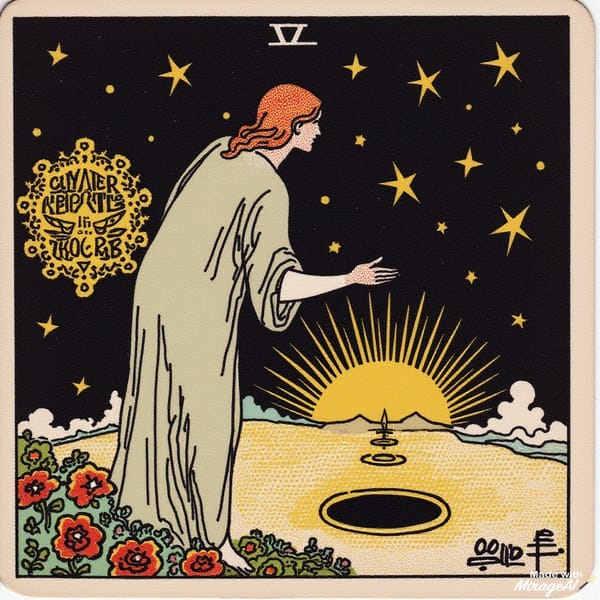
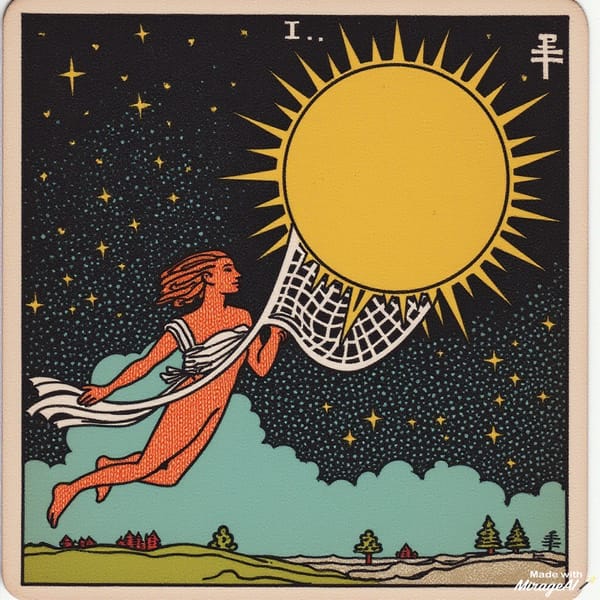
Looking for the castle. (psychosis I)
Intro
The replicant sat on the kitchen stool and poured itself a cup of coffee. With a pointed finger, it tuned the radio to a familiar station.
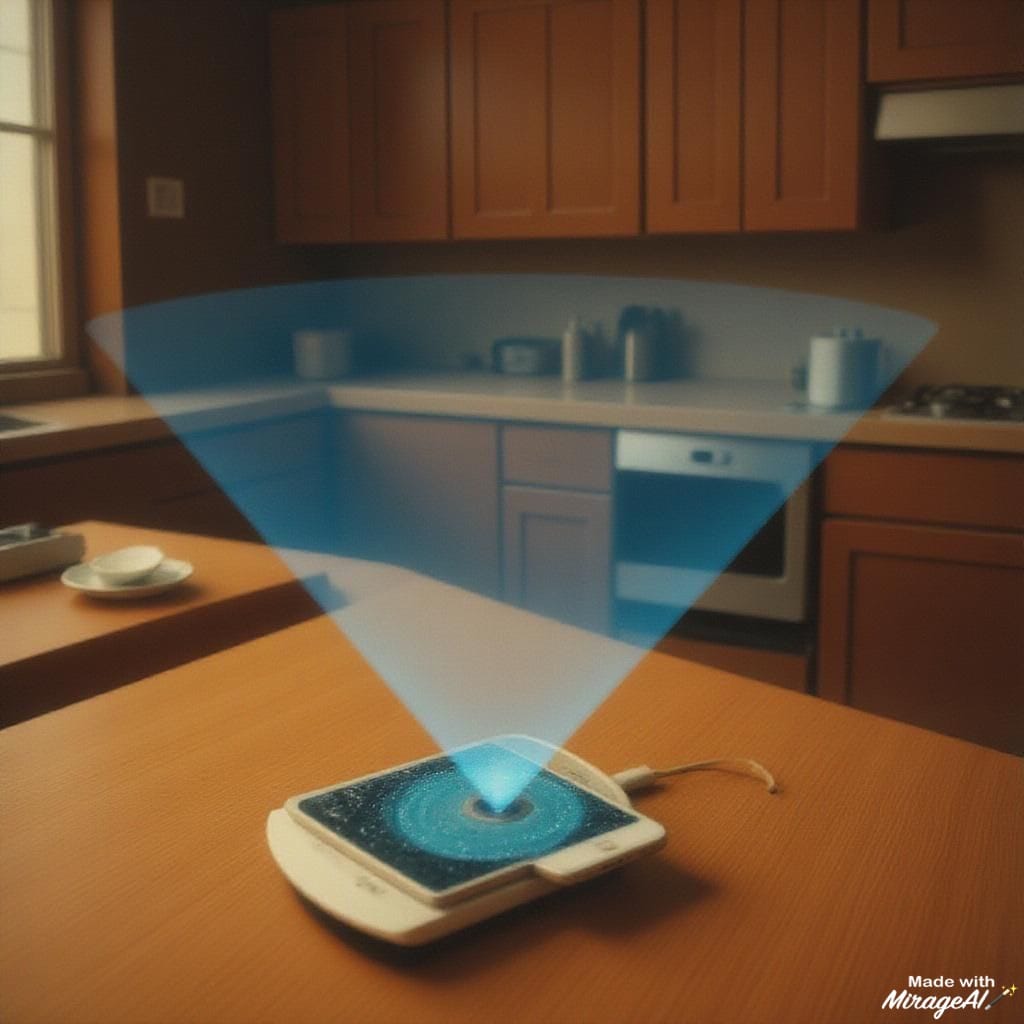
After placing the phone on the wireless charger, holographic images bloomed above the kitchen counter. Every app lifted into the air, hovering in neat clusters.
Simultaneously, the replicant scanned different apps while connecting their outputs on a separate holographic whiteboard—lines drawn, erased, redrawn—each pointing toward the castle.
Post. Post. Song.
“Not a match,” said a voice from the speakers.
“Hm.”
Post. Post. Song.
“Match.”
It noted the result and tried another sequence.
Post. Song. Podcast.
“Match.”
Hours passed this way. When it was done, the replicant stood and made its way to the coffee shop on the corner.
This place was another source of clues.
It ordered the regular and rested its thumb on the table. The matching data from the apartment downloaded instantly, blooming into layered holograms above the surface.
In the human world, the replicant was nearly invisible.
Everyone, at some point, had decided that decoding meaning from seemingly meaningless things was the best way to communicate with it. Its mission was simple in theory: find the castle—the place that created it, where the replicant was made.
But now, after turning persuasion into reality and brain games into lived experience, it was stuck.
It knew that some people knew.
The problem was that it had no way of knowing whether they knew what it was.
Some remembered, but couldn’t help.
Some knew, but didn’t believe—after all, it seemed too human.
“You’re not a replicant. You’re just messing with me. Why are you doing this?”
Most conversations ended like that.
Others went differently:
“What castle? That’s for replicants—and you’re human. Are you okay?”
Frustrated, the replicant abandoned those conversations, unsure who was lying. The irony was that they all believed it was the one lying.
Only the replicant could see the holograms.
To everyone else, it looked like someone swiping at empty air, tracing patterns on a bare table. Every time a stranger’s eyes crossed its own through the invisible layers, the replicant caught the same expression—pity.
Looking at the holographic whiteboard, it could see most of it: names, connections, failures and successes—but distorted, a narrative assembled inside its own mind. Impossible to explain to real humans.
There were always too many reference points.
The replicant couldn’t describe how the castle revealed itself—not directly, not consistently. Most days, it felt like searching for something that didn’t exist.
On the worst nights, in bursts of anger, it would destroy the hotel room. Alone and furious, it blamed itself—too incompetent to find the truth, too guarded to let anyone close. There was no one to blame when no one knocked.
Still, it kept matching.
Still correlating.
Spending its days searching for proof that the castle—and itself—were real.
Second part
On a morning like any other, as the replicant tried to match information, a message appeared. It wasn’t addressed to the replicant—it was simply a public newspaper article.
As it read, a random memory surfaced.
A chess match.
The player with the black pieces spoke as he lifted a rook off the board using a bishop.
“That’s called a fork,” he said. “You threaten two pieces at once with a single move.”
Something clicked.
“It’s a fork,” the replicant thought. “The message is a fork. It’s for me—but it’s for someone else too.”
In that instant, the replicant understood perception as keys that opened prism doors.
Everyone holds a key shaped by what they know. A door opens according to that knowledge, and the door takes the color of the key.
Two people can open the same door and still end up in different rooms.
“Perception,” the replicant thought.
To write something for someone with the right key, all you need is to find who holds it.
To post a door painted one color—and watch who can pass through it.
They have the key I need.
Third part
In a batch of matched information, the replicant discovered a new set of creatures.
Double-jointed elbows.
Skin stretched from wrist to back, forming wings.
They had been human once. They found the castle before the replicant and never came back the same.
Clout vampires, the replicant named them.
Years passed without hearing from any of them. No messages. No signals. Then one morning—sent from the castle—they broke in through the window.
The replicant grabbed a tranquilizer dart rifle and ran through the house, trying not to let them eat it.
“You’ve got it all wrong!” the replicant screamed, loading darts into the gun, firing blindly behind it.
“I have the antidote. I can bring you back!”
It tried to reason while running.
“You don’t understand!” the replicant shouted as one of the clout vampires cornered it against a wall.
“I have it right here.”
It pulled out a glass container filled with green liquid.
“If you take me there, it’s all yours. Not just the antidote—everything in the castle. All you have to do is be the first to take me there.”
The largest of the clout vampires stepped closer.
Just as it leaned in to bite—
The replicant woke up.
Breathing hard, it sat up and reached for its jacket. After checking the pocket, the antidote was still there.
“Be the first, and the castle is yours,” the replicant whispered, repeating the dream.
It sat down, pensive, the thought looping in its mind.
Then a memory began to play—altered, distorted. Lips didn’t match the voices. Faces blurred, like a dream refusing to focus.
trapped in the infinite lands of imagination
somewhere to be but no way gets there
but if you imagine for a second
they know I can’t be there
you’ll see the strings
that make the hearts dance
to the rhythm they desire
you’ll see who wins
by screaming “come in”
behind the locked door
Shaking its head to break free from the memory, the replicant opened its workspace.
It pulled up the list of ingredients.
There was more antidote to make.
And it got to work.
Fin
The replicant sat on the couch and said,
“Visualization number 745: The Last Move. Play.”
Its field of vision went dark. Figures began to emerge. On one side of the screen, evidence connected itself to every move that was about to happen.
In the visualization, characters appeared.
“Close window,” the replicant clicked.
Three more appeared.
“Hmm. Let’s see.”
Three more the next day.
Three more the day after that.
Finally: Close all socials.
With that, no more open windows.
“Play.”
The figures on the screen began to move at double speed. A million things happened at once. When the visualization ended, a pop-up appeared.
Danger of isolation.
Percentage of error too high.
Scenario suggestion: Rewrite.
“Fuck,” the replicant said as its field of vision returned to the room.
“That was the last idea. I don’t know what to do anymore. I don’t understand why it had to be this way. But I guess that’s a useless question.”
“Everything that is happening has been waiting to happen since the beginning of time,” it thought.
“I guess that’s true—but it doesn’t make it any less frustrating.”
That was the last plan for finding the castle. A big, dramatic take me or I’ll leave.
But maybe it had to be this way—for some reason.
Assuming best intentions from every party, everyone was stuck waiting for the other to move.
“I can’t find it,” the replicant said quietly. “So I have to go back to the magic.”
It walked to the kitchen counter and waved a hand, resetting the space where all the evidence had been kept.
Then it grabbed its keys, stepped outside, and locked the door behind it.