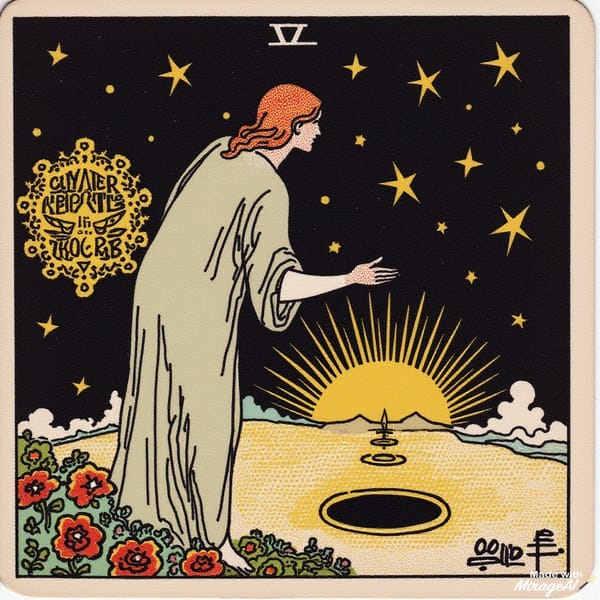
His conscience


He clicked the recorder and continued.
“Patient Carlos M. Eighty years old. Dementia. Part of the case, though it’s unclear how much of the story is true.”
He entered the room and pulled up a chair.
“Good morning, Mr. Carlos. How are you feeling today?”
“I’m good,” Carlos said, gazing out the window.
“Is it okay if I ask you a few questions again?”
“Yes,” Carlos replied.
“What’s today’s date?”
“It’s March 1967,” Carlos said.
“And what happened yesterday?”
Carlos paused. “Someone tried to hang themselves… I just had surgery, but the scar is healed. And the doctor told me my wife was a match for my heart transplant.”
He stopped, holding back tears.
The interviewer waited as Carlos pressed a hand to his chest.
“And then what happened?”
Carlos looked up, still holding his heart—but the tears and sadness had vanished completely, as if they had never been there.
“Then… um…” he hesitated.
“What year is it?” the interviewer asked, recognizing the shift.
“1972,” Carlos replied slowly.
“General,” he continued carefully, “you were assigned to an off-the-record mission to gather information on a target. Can you recall the details of the operation?”
Carlos’s demeanor changed instantly. His posture straightened.
“Yes. We were never told the country. The dialect was of Oriental descent.”
He began describing the mission in detail, pausing where official records had been redacted.
Astonished, the interviewer asked, “Sir—off the record—how did you manage to go so many years without being detected, or firing a single bullet?”
Carlos looked up with a half-smile.
“That’s a story you’re not ready for,” he said in a raspy voice before coughing to catch his breath.
“You see, my wife never left me. She’s still here—inside.” He tapped his chest gently. “She became my compass. My conscience.”
The interviewer held his gaze, stunned. After a moment, he asked softly, “What year is it?”
Carlos laughed. “Still 1972. And it’s still true. On every mission, there were words in music that told me where to go. Letters rearranged themselves on menus to send messages.”
He smiled mischievously. “And when a pretty woman passed by and I looked a little too long—she’d give me a sharp pinch in the heart. Or the forehead.”
The interviewer hesitated. “We’re compiling this data to train new agents. That’s why I’m asking so many questions.”
Carlos shook his head.
“I can’t help you with training. I don’t know if others would be lucky enough to keep someone in their heart. She probably stayed because she knew I’d be helpless without her.”
“Sir… I can’t put this in the report,” the interviewer said carefully. “You’re saying the ghost of your wife guided you on every mission?”
“Every one,” Carlos replied. “Who to trust. Where to look. When to leave. Though I’ll admit—her jealousy made the ‘who to trust’ part complicated.”
The interviewer set his pen on top of the clipboard, no longer writing but unwilling to stop listening.
“And her being your conscience?”
“Yes,” Carlos said quietly. “The pain in my heart—then in my head. Especially when I held a gun to a man’s head.”
He swallowed. “He was innocent. And in her way, she told me it was wrong.”
“So you never remarried?”
“Everyone says that’s what she would’ve wanted,” Carlos said, letting out a deep laugh. “But they don’t really know.”
“I tried. I really did. But every time—disappointment. Pain. I could feel my heart break again. And then the pain in my head.”
He shook his head.
“So no. Never remarried. But I was never truly alone either. She kept me alive. Kept me on the right path.”
His tone darkened.
“I could feel the heartbreak when I got angry. Almost afraid.”
He paused.
“Sometimes I wonder if it was fair that she didn’t move on—that she stayed trapped inside me, feeling the emptiness, the darkness after she left.”
“And the anger,” he continued softly, pressing his hand to his head again, “the impulses I learned to tame so she wouldn’t have to feel them.”
The interviewer felt tears welling up. Then silence.
He understood what had happened.
“Good morning, Carlos,” he said gently. “What’s today’s date?”
Carlos smiled faintly.
“Good morning. It’s March 1967.”